
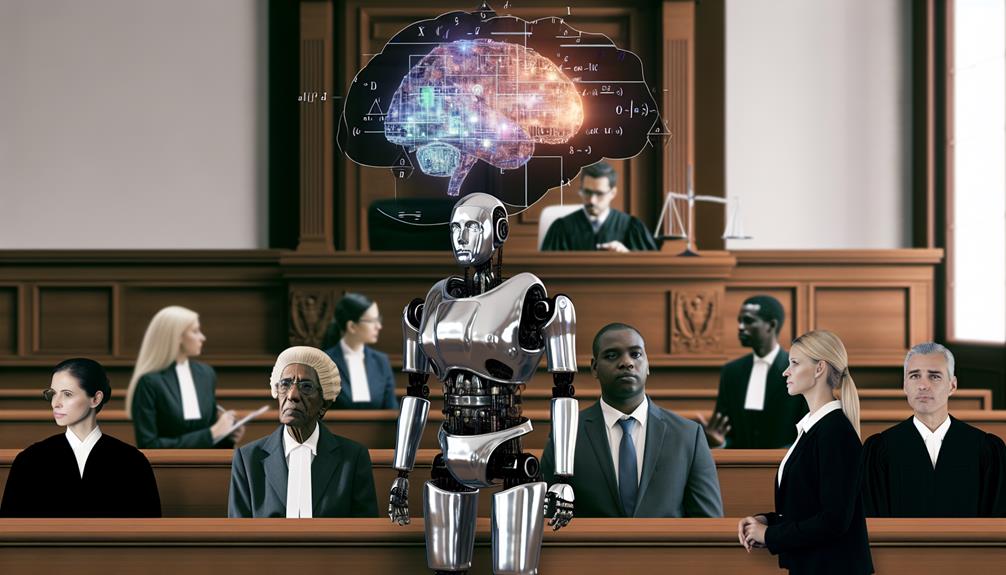
Picture a world where artificial intelligence isn't just a tool, but a legal entity with rights and responsibilities. The debate over whether AI should be considered a legal person is a hot topic that challenges the core principles of law and ethics.
As we contemplate the implications of granting personhood to AI, we must consider how it could impact our legal system and society as a whole. This ongoing discussion about AI as a legal person has profound implications for the future of technology and humanity.
Key Takeaways
AI doesn't have the same legal status as a person in most places right now. The conversation around whether AI should be granted legal personhood and the rights that come with it is ongoing. Legal systems are adapting to consider the rights, duties, and liability of AI. Figuring out if AI can be seen as a person legally involves looking at its independence and accountability, which is a complex issue. Changes may happen in the future to align how AI is legally recognized with what society values.
Ethical Considerations in AI Personhood
When we talk about the ethical implications of giving legal rights to AI, we're diving into a complicated world of rights and duties. It raises big questions about what rights AI should have and what responsibilities come with those rights. Ethics play a crucial role here because we need to think about how we treat AI compared to how we treat humans or animals in the eyes of the law.
The real challenge is weighing the pros and cons of granting legal personhood to AI. It's all about finding a middle ground between acknowledging AI's rights and fitting them into our societal norms and values. This balancing act is a tough ethical puzzle that requires us to carefully consider where AI fits in our current legal system while ensuring they're treated ethically.
Understanding the ins and outs of AI's legal rights is key to creating a fair and just society where every being, whether artificial or not, gets the rights and responsibilities they deserve.
Legal Implications of AI Rights
When we talk about the legal implications of granting AI rights, we're diving into a complex world of accountability, ownership, contracts, and legal know-how for AI entities. Imagine if AI were considered legal persons – it raises a slew of questions about their rights, responsibilities, and how they'd be held accountable under the law. Just like humans, AI could potentially face penalties for breaking the rules.
Finding a balance between the rights and duties of AI and those of us humans is a major challenge when it comes to deciding if AI should have legal personhood. We've to think about whether they follow the law, adhere to ethical standards, and even have the capacity for creativity. It's not just about giving them personhood; it's about creating a fair and just legal system for AI that considers all these factors.
The legal implications of AI rights go way beyond just the idea of personhood. It's a whole world of complexities that need careful examination to make sure we create a legal framework that's fair to both AI and humans.
Accountability and AI Technology
When it comes to AI technology, figuring out who's responsible for what can get pretty tricky. People are debating whether we should hold AI itself accountable for any mess-ups or wrong moves it makes. But here's the thing: the choices made when programming and designing AI can determine how much legal blame it carries. It's a delicate balance between reaping the benefits of AI and making sure it plays by the rules.
As we dive deeper into the world of AI advancements, we need to grasp how this tech affects our existing laws. Getting a handle on this is key to tackling accountability problems in today's digital age. We've got to navigate where the law meets AI capabilities to create a system that encourages innovation while keeping everyone in check. By carefully navigating the legal ins and outs alongside tech progress, we can strike a good balance between moving forward and taking responsibility.
Challenges in Defining AI Personhood
When we dive into the complexities of defining AI personhood, we're faced with a maze of legal and technological puzzles. The idea of granting legal personhood to artificial intelligence (AI) sparks deep questions about ethics, rights, and duties linked to these entities. Pinning down the criteria for AI personhood within our current legal systems is no walk in the park. It involves figuring out how much autonomy, decision-making skills, and moral judgment AI systems actually possess. Moreover, the ongoing discussion about AI personhood sheds light on the delicate balance between acknowledging AI as legal persons and adhering to societal norms and ethical codes.
Defining AI personhood also means tackling the thorny issues of accountability and liability. As AI technologies advance and become more ingrained in our daily lives, the question of who's responsible for AI actions looms larger. This includes pondering who owns content created by AI, the repercussions for existing legal frameworks, and how liability laws might need to change. Wrestling with these challenges demands a deep understanding of where AI capabilities intersect with the legal principles underpinning personhood.
Impact on Liability Laws
With the rise of AI technologies infiltrating various industries, the impact on liability laws is causing quite a stir among legal experts and policymakers. The idea of granting AI legal personhood raises complex issues surrounding liability, particularly when AI entities are implicated in causing harm or loss.
Figuring out who's accountable in AI-related incidents becomes a tangled web due to the uncertain legal status of AI entities as potential legal persons. Providing legal personhood to AI could significantly alter how blame and liability are determined in cases involving AI technology.
Clarity on liability laws is crucial to navigate the legal implications of assigning legal personhood to AI entities accurately. The legal framework governing liability laws will need to adjust to accommodate AI entities as potential legal persons in cases of wrongdoing.
Societal Implications of AI Personhood
The whole idea of granting legal personhood to AI brings up some big questions about how it might change things in our society. If we start treating AI like legal persons, we'd have to rethink what rights and duties these non-human entities should have. This could mean updating our laws to include AI, which raises tricky issues about who's responsible for what in our communities.
Ethics also play a huge role here, guiding how we should treat AI as legal persons and setting the stage for future rules and standards around AI tech.
Balancing the rights and duties of AI with those of humans is no easy task and needs careful handling in the debate about AI personhood. And let's not forget the concerns about AI misusing or taking advantage of their legal status – that's a big part of figuring out what it would mean for society if AI were legally recognized as persons.
Future of AI Legal Recognition
The world of AI technology is rapidly changing how we think about the legal status of AI entities. With AI advancements on the rise, the conversation around whether AI should have legal personhood is gaining momentum. It's becoming clear that experts from various fields need to come together to tackle the complex issue of granting legal rights to AI. Finding the right balance between encouraging innovation and setting necessary boundaries will be key in shaping the future of AI in the eyes of the law.
The idea of giving AI legal personhood carries significant implications for AI ethics and legal frameworks. As we venture into uncharted territory, it's crucial that we approach this decision with careful thought and strategic planning to ensure it aligns with the values of a free society. The road ahead will require us to navigate these challenges with a keen eye on the implications for the future. Let's tread wisely as we explore the possibilities and responsibilities that come with recognizing AI in the legal realm.
Frequently Asked Questions
Can AI Be Held Responsible for Its Actions?
When it comes to holding AI accountable for its actions, it all boils down to the legal responsibilities ingrained in its programming. The level of AI's liability is directly linked to how it's been programmed, shaping the extent of its accountability. By examining the impact and duties assigned to AI, we can determine its legal obligations, prompting us to ponder the concept of accountability in the realm of artificial intelligence.
How Does AI Personhood Affect Privacy Rights?
When we talk about how AI personhood impacts our privacy rights, it's like navigating a maze of data protection, confidentiality, and autonomy. Finding the right balance between AI's privacy rights and the interests of society is crucial in today's digital world. It's a tricky dance that requires us to be mindful of both sides of the coin. We're living in an era where our personal information is more valuable than ever, so understanding the implications of AI personhood on our privacy is key to safeguarding our digital lives.
Will AI Have the Right to Own Property?
You know what's coming? AI is going to own property! Just picture the chaos in courtrooms when robots start snatching up land and patents. Brace yourself for all the battles over rights and duties that are bound to happen. Human laws will be dancing to AI's beat before you know it. Are you ready for the ride?
What Are the Implications of AI Rights on Job Market?
Introducing AI rights into the job market could lead to the creation of new positions focused on AI ethics and accountability. This change might require specific legal structures, labor regulations, and a rising need for professionals specializing in AI ethics and law. The demand for experts in this field is expected to grow as companies navigate the implications of AI rights in the workplace.
How Will AI Legal Recognition Impact Intellectual Property Rights?
AI gaining legal recognition is reshaping intellectual property rights. With this shift, we are witnessing the emergence of new frameworks to navigate the realm of AI creativity within copyright, patents, and trademarks. Clarity on ownership is becoming increasingly crucial to prevent disputes and ensure fair compensation for all involved parties. This evolution marks a significant turning point in the intersection of AI and legal rights, setting the stage for a more defined landscape where innovation can thrive while safeguarding the rights of creators and innovators.

