
Picture a chatbot as a skilled juggler, effortlessly handling a variety of customer queries while making sure each interaction is tailored and quick. Businesses are increasingly investing in chatbots to boost customer satisfaction, and the conversations are changing.
These AI-driven chatbots have the potential to transform customer service, marketing, and sales. Companies are embracing the power of chatbots to improve their operations.
But how are they navigating this new landscape, and what strategies are proving to be the most effective?
Key Takeaways
By 2021, a whopping $4.5 billion influx is anticipated in the chatbot industry. These conversational bots are getting smarter, thanks to machine learning and natural language processing (NLP), making chats more personalized than ever. From customer service to marketing and sales, chatbots are seamlessly integrated to enhance user interactions. By analyzing data, responses are fine-tuned for top-quality engagement.
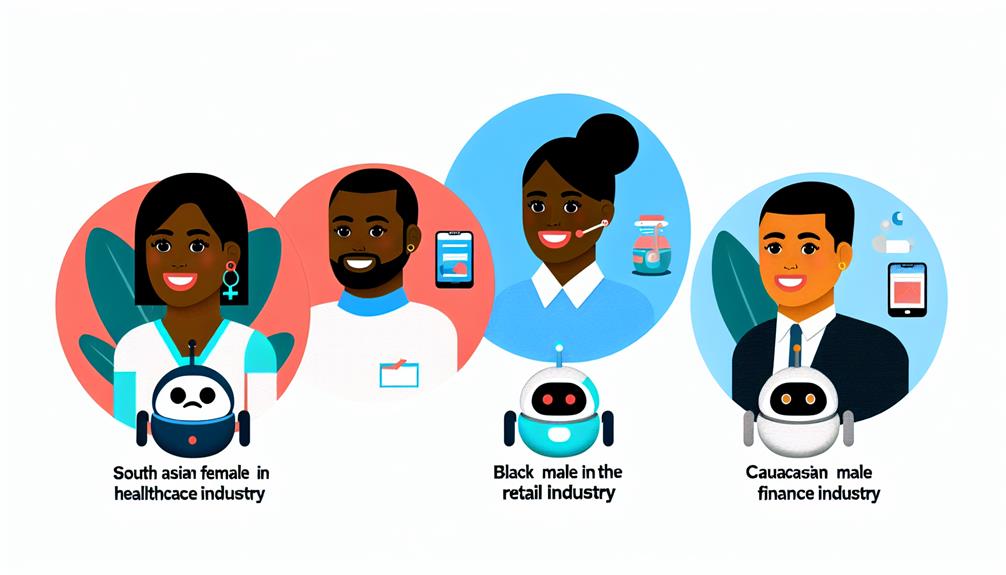
Key sectors like finance, retail, and healthcare are at the forefront of adopting chatbots to elevate customer experiences. This surge in investment highlights the growing importance of chatbot technology in modern business operations.
Exploring the Surge in Investment
Businesses worldwide are really diving into chatbots these days, with an expected investment surge reaching $4.5 billion by 2021. This uptick in spending is all about stepping up the customer experience game through fancy tech like machine learning and natural language processing (NLP). Companies are getting savvy with these tools to create more personalized and efficient chats with customers. By weaving chatbots into everything from customer service to marketing and sales, businesses are striving to offer smooth, natural conversations for their clientele.
Thanks to machine learning tricks, chatbots keep getting better at chatting by analyzing data and upgrading their responses. And NLP? Well, it lets chatbots grasp human language and communicate more naturally and effectively. This push for chatbot investments shows how crucial it's to embrace tech for top-notch customer engagement and satisfaction, ultimately boosting business growth in every industry out there.
Leading Business Sectors
In the realm of industries, the finance sector stands out for its heavy investment in chatbots, with a whopping 72% of financial institutions integrating these virtual assistants to enhance customer service and support.
Not far behind, the retail sector follows suit, with 68% of retail businesses jumping on the chatbot bandwagon to elevate customer interactions and drive sales.
Healthcare organizations are also catching on, with 34% of healthcare providers leveraging chatbots to streamline patient engagement and support.
The finance sector leads the pack due to the pressing need for personalized and efficient customer service, while retail businesses recognize the potential of chatbots in improving overall customer experiences. Healthcare providers are gradually embracing chatbots to boost patient care and operational efficiency.
This trend towards chatbot integration signifies a broader movement across industries, where businesses are increasingly turning to technology to enhance customer interactions and operational outcomes.
Analyzing Customer Satisfaction Impact

Understanding how customers feel after interacting with a chatbot is super important for knowing if they're happy with the service. Businesses use fancy metrics like Net Promoter Score (NPS) and Customer Satisfaction (CSAT) scores to figure out how satisfied customers are with the chatbot help they get. By looking at this data, companies can learn a lot about how to improve their chatbot responses and make sure customers are getting top-notch service. Knowing how chatbots affect customer satisfaction helps companies see where they can do better and make smart decisions to keep customers happy and loyal.
- Net Promoter Score (NPS): This measures how likely customers are to recommend a business, showing how loyal they are.
- Customer Satisfaction (CSAT) scores: These scores tell us how happy customers are with the service they get from chatbots.
Successful Integration Case Studies
Ever wondered how businesses are leveling up their customer service game with chatbots? Let's dive into some real success stories that showcase the game-changing impact of integrating chatbots:
- Picture this: Company X saw a whopping 40% surge in customer satisfaction once they rolled out a chatbot for instant support.
- Then there's Business Y, cutting down their customer service response times by half – a cool 50% improvement – thanks to their chatbot handling inquiries like a pro.
- Organization Z? They managed to shrink their support ticket pile by 30% just by having a chatbot tackle those common questions head-on.
- And Retailer A? Their sales shot up by a solid 25% because their chatbot was nailing those personalized product recommendations.
These stories aren't just success tales; they're proof that integrating chatbots can rev up customer satisfaction and streamline operations. By peeking into these real-world examples, businesses can see firsthand how chatbots can supercharge both customer experience and efficiency.
Future of Chatbot Economics

When thinking about the future of chatbot economics, it's crucial to explore the different ways they can generate revenue and the costs involved.
Understanding how to balance investments with returns in chatbot technology is key for businesses looking to boost efficiency and profits.
Finding creative ways to make money from chatbots while keeping costs in check is essential for unlocking their full economic potential.
It's like navigating a financial puzzle where every piece matters in maximizing gains and minimizing expenses.
Chatbot Revenue Models
The world of chatbot economics is evolving rapidly as businesses embrace a variety of revenue models to drive their chatbot monetization strategies. They're getting creative with ways to make the most of chatbot interactions:
- Subscriptions: Businesses are offering subscription-based models to secure a consistent income stream for users accessing chatbot services.
- Transactions: Some are opting for transactional models, where users pay for specific actions like making purchases or bookings.
- Pay-Per-Use: Charging based on the volume of interactions or tasks completed is another popular approach businesses are taking.
- Hybrids: Combining different models, like a base subscription fee with extra charges for premium features or heavy usage, is gaining traction.
These diverse models not only offer flexibility but also promise potential revenue growth in the ever-evolving chatbot market. It's exciting to see how businesses are adapting to this new landscape!
Chatbot Cost Analysis
Exploring the realm of chatbot economics unveils a landscape where careful cost analysis plays a crucial role in shaping businesses' future strategic investments. The development expenses for chatbots, ranging from $2,000 to $300,000, along with maintenance costs of 15-20% annually, are key considerations.
Deploying chatbots can result in substantial savings, potentially cutting customer service costs by up to 30%. With the global chatbot market set to reach $1.25 billion by 2025, understanding these cost dynamics is increasingly vital.
Integrating chatbots could lead to a significant 40% decrease in customer support expenses, making a strong case for businesses to thoroughly assess the financial implications of adopting this technology.
Chatbot ROI Strategies
When it comes to making the most out of chatbots to boost your business, there's a world of opportunities to enhance returns and trim costs. Here are some key areas to focus on when aiming to maximize your chatbot investment:
- Cutting Customer Service Expenses: Chatbots have the potential to slash customer service costs by around 30%.
- Unlocking Savings: Introducing chatbots for customer support can result in yearly savings of up to $8 billion.
- Anticipated Savings: By 2022, it's projected that chatbots will drive savings exceeding $8 billion.
- Boosting Customer Engagement: Businesses leveraging chatbots typically see a significant 70-80% uptick in customer engagement metrics.
Investment Trends in Chatbot Maintenance
Businesses nowadays are really focusing on making sure their chatbots work smoothly to give customers the best experience possible. Chatbots have become super important in boosting customer satisfaction, so companies are putting a lot of effort into keeping them running well. The global market for chatbot maintenance is expected to reach $1.25 billion by 2025, showing just how crucial it's to invest in keeping chatbots up and running. This investment covers things like regular updates, fixing any bugs, and keeping an eye on performance to make sure conversations flow seamlessly and bring in better returns on investment.
The big push to optimize chatbot performance comes from the need to provide reliable and efficient customer support all day, every day. By being proactive about maintaining chatbots, businesses can keep up in the fast-paced chatbot industry. Prioritizing chatbot maintenance not only makes customers happier but also leads to more effective interactions, ultimately boosting customer satisfaction levels.
Impact of Chatbot Upkeep on Sales
Taking care of your chatbots can significantly boost your sales performance. Imagine seeing a 20% jump in conversion rates, a 15% drop in customer churn, and a whopping 25% increase in customer satisfaction scores.
These benefits are crystal clear. What's more, with a 30% decrease in support ticket volumes and a potential 10% revenue bump, the positive impact on your business's bottom line is hard to ignore.
Maintaining your chatbots is like giving your sales team a power boost!
Sales Boost From Chatbots
Keeping your chatbot in top shape can have a significant impact on your business's bottom line. Well-maintained chatbots can do wonders for your sales performance, boosting conversion rates and customer loyalty in remarkable ways:
- Boosted Sales: Enjoy a potential 30% increase in sales by offering personalized product recommendations.
- Cost-Efficient Customer Acquisition: Witness a 67% surge in sales conversion rates, reducing your customer acquisition costs.
- Higher Order Values: Integrate your chatbot with eCommerce platforms for a possible 50% increase in average order value.
- Improved Customer Loyalty: Effective chatbot upkeep can lead to a 35% rise in customer retention rates, fostering loyalty.
Chatbot Maintenance Benefits
Maintaining your chatbot regularly can make a significant difference in how well it performs, which can have a direct impact on your sales numbers. When you invest in keeping your chatbot up to date, you can see a remarkable 80% increase in customer engagement, leading to a solid 20% boost in sales conversions.
It's also worth noting that by consistently updating your chatbot's content and features, you can experience a notable 15% uptick in customer satisfaction levels. Companies that prioritize chatbot maintenance not only enhance the overall customer experience but also enjoy a 25% reduction in customer service costs and a 30% decrease in response times through proactive strategies.
Ultimately, ensuring your chatbot is well-maintained doesn't just benefit your customers—it also drives sales growth and operational efficiency. So, don't underestimate the power of regular chatbot upkeep in achieving your business goals.
Innovative Chatbot Strategies

Businesses nowadays are really getting into using chatbots to step up how they engage with customers and boost their bottom line. They're diving into some cool tactics to make it happen:
- Getting Ahead of the Game: Chatbots are getting smarter, foreseeing what customers might need before they even ask for it.
- Personal Touch: These chatbots are using fancy AI to read customers' vibes and preferences, so they can tailor their responses and make the chat more fun.
- Smooth Sailing for Customers: By linking up with CRM systems, chatbots are giving customers a seamless experience no matter where they reach out from, making sure they're happy campers.
- Boosting Sales: Businesses are cashing in on chatbots to reel in leads, nurture potential customers, and seal the deal more effectively.
These strategies show how chatbots are taking customer engagement and business efficiency to the next level, setting businesses up for success in today's tough market.
Customer Satisfaction Metrics
When you look at customer satisfaction measures, one key thing to consider is how quickly chatbots respond.
Understanding the impact of personalized chats on metrics like CSAT and NPS is crucial for boosting customer happiness.
Response Time Importance
Navigating today's fast-paced digital world means meeting customer needs in real-time is key to keeping them happy and driving sales. Here's the lowdown:
- Most folks, about 64%, expect quick responses, showing how crucial it's to engage immediately.
- Speedy replies are a must for 90% of customers seeking help.
- Being prompt can up satisfaction levels; studies show 42% of customers are more likely to buy from businesses that reply fast.
- Responding within 5 minutes can seriously bump up conversion rates, proving that swift interactions are a game-changer for success.
In a nutshell, being on the ball with responses can make or break your customer relationships and bottom line.
Personalized Interactions Impact
Improving customer satisfaction with personalized chats from chatbots can make a big difference in how happy people are with a company. Studies show that tailoring interactions can boost satisfaction by as much as 20%, leading to a 15% higher chance that customers stick around.
It's no surprise that 80% of people prefer to engage with businesses that offer personalized chatbot experiences, showing just how crucial these tailored conversations are. Not to mention, chatbots that give personalized suggestions could up sales by 10%, proving their impact on business success.
Companies embracing personalized chatbot talks also see a solid 25% increase in customer loyalty and engagement, proving that customized experiences go a long way in building lasting relationships with consumers.
Metrics for Improvement
When it comes to evaluating and improving chatbot performance, keeping an eye on customer satisfaction is key. Understanding how satisfied customers are with their interactions with chatbots can provide valuable insights to enhance overall customer experiences.
Metrics like CSAT (Customer Satisfaction Score) and NPS (Net Promoter Score) offer feedback on customer loyalty and satisfaction levels, helping businesses pinpoint areas for improvement in chatbot performance. By tracking these metrics, businesses can refine their strategies to boost customer satisfaction, which can lead to improved retention rates and increased customer loyalty.
It's important to measure satisfaction levels, gather insights for enhancement, identify areas for improvement, and ultimately enhance customer experiences through chatbot interactions.
Industry-Specific Chatbot Applications
In different industries, chatbots are like versatile assistants, each tailored to meet specific needs and functions. Let's dive into how they work wonders across various sectors:
Healthcare is all about caring, and chatbots step in to offer medical advice, set up appointments, and provide mental health support. They're like virtual healthcare buddies, making it easier for people to access the care they need.
In the retail world, chatbots are the wizards behind personalized product suggestions, enhancing the shopping experience and boosting sales. They also handle order tracking and swiftly address customer queries, ensuring smooth transactions.
Financial institutions rely on chatbots for managing accounts efficiently, aiding in bill payments, and sniffing out fraud. These digital helpers elevate operational efficiency and security measures, keeping financial matters in check.
Travel wouldn't be as smooth without chatbots streamlining booking processes, sharing travel details, and offering 24/7 customer assistance. They ensure travelers have a hassle-free journey from start to finish.
Educational institutions find chatbots invaluable for tasks like course registration, answering student questions, and guiding academic pursuits. These virtual assistants simplify administrative tasks and offer vital support to students navigating their educational journey.
Chatbot Integration Best Practices

Looking to boost your business operations with chatbots? Here are some tips to seamlessly integrate them for top efficiency and better customer interactions:
- Pick the Right Chatbot: Choose a chatbot that fits your business needs perfectly for the best results.
- Create a Unique Bot Personality: Give your chatbot a personality that matches your brand voice for consistent customer interactions.
- Improve User Experience: Use user-friendly design elements to enhance the overall experience.
- Craft Natural Conversations: Design chatbot dialogues to feel like real human interactions to keep users engaged.
Chatbot ROI Projections
Businesses are gearing up for significant savings and revenue boosts with the rise of chatbots in the near future. As AI technology evolves, the advantages of using AI chatbots are becoming more apparent. By 2022, companies are eyeing a hefty $8 billion in savings through chatbot automation. Not stopping there, chatbots are expected to play a major role in generating a whopping $112 billion in retail sales by 2023.
The overall estimate across various industries suggests that chatbots could lead to an impressive $439 billion in savings by 2024, highlighting their potential for cutting costs and improving efficiency. In the healthcare field, integrating chatbots is forecasted to deliver savings of about $3.6 billion by 2022.
Looking forward, chatbots are projected to slash customer service expenses by 30% by 2025, showcasing their ability to streamline operations and enhance customer interactions. With businesses investing in chatbot technology, the anticipated return on investment underscores the value and transformative power of these AI-driven conversational agents.
Frequently Asked Questions
What Are the Financial Benefits of Chatbots?
Chatbots can really make a difference for businesses. They help save money, drive up sales, and free up time. Picture this – they could save companies billions every year, boost sales by a whopping 67%, and slash response times by 4 minutes per query. And the best part? They cost just $0.50 to $0.70 less per interaction.
How Much Money Do Chatbots Save Companies?
Guess what? Chatbots are a game-changer for businesses! They can slash customer service expenses by around 30%, which adds up to saving billions every year. Handling 80% of inquiries means companies can pocket $0.70-$0.90 per interaction. It's like having a money-saving sidekick for your business!
How Can Businesses Benefit From Integrating Chatbots Into Their Operations?
So, you're thinking about adding chatbots to your business operations, right? Well, let me tell you, they can really take your customer support to the next level, make tasks a breeze, and supercharge your efficiency. These little bots are like data wizards, making interactions personal and boosting your sales and marketing game. Chatbots are not only cost-effective but also super productive and keep your customers engaged, giving them a smooth and hassle-free experience. Trust me, once you try them out, you won't look back!
What Value Chatbots Bring to Businesses and Customers?
Chatbots are like having a super helpful assistant for your business. They're there to make your customers happy, boost your sales, and make everything run smoothly. Picture this: they make shopping a breeze, let you chat with customers on different platforms, and keep them engaged. All of this adds up to stronger customer loyalty and more money in your pocket.