Businesses today are really getting into using voice-activated chatbots to change how they interact with customers and improve their services. With smart AI and voice recognition tech, companies can provide customized support, boost efficiency, and ensure smooth communication.
Moving towards these voice-activated chatbots not only makes customers happier but also gives cost-effective solutions and 24/7 availability. As businesses navigate this changing landscape, the potential for growth and innovation in voice technology is huge.
Key Takeaways
Voice-activated chatbots are a game-changer for customer service, making the experience smoother and more convenient. Businesses really reap the benefits of this personalized engagement with customers. Voice technology doesn't just save time, it amps up productivity and efficiency in a big way. Of course, there are hurdles like technical glitches and privacy worries, but there are smart solutions out there. Advanced speech recognition and fine-tuning AI are key to ironing out these kinks.
Voice-Activated Chatbots Revolutionizing Customer Interaction
Voice-activated chatbots have completely changed the game for businesses in how they connect with customers. These chatbots, powered by cutting-edge AI technology, offer immediate responses by simply using your voice. They employ voice recognition tech to interact with customers in real-time, giving tailored assistance and suggestions based on individual questions. By incorporating this advanced technology, businesses can provide a smooth and effective customer service experience, ultimately boosting satisfaction and loyalty.
For customers, the convenience of engaging with businesses through voice-activated chatbots is unparalleled. It enables hands-free communication and instant access to information. Not only does this streamline the customer service process, but it also ensures round-the-clock support, allowing customers to get help whenever they need it.
Moreover, businesses can make significant savings on operational costs by using voice-activated chatbots, reducing the need for large customer service teams. By automating responses and swiftly resolving common queries, chatbots enhance efficiency and optimize resources for businesses of all sizes. Embracing voice-activated chatbots is a strategic move that can transform customer interaction and propel business success.
Benefits of Voice-Activated Technology for Businesses
Transforming customer interactions, businesses can tap into the power of voice-activated technology to enhance customer experience and streamline operations. Voice-activated technology brings a host of advantages for businesses:
- Personalized Customer Engagement:
Voice-activated chatbots offer instant responses and tailored recommendations, making interactions more interactive and personalized for customers. This personalized touch can significantly boost customer satisfaction and loyalty.
- Efficient Customer Support:
Businesses can efficiently handle a large number of customer inquiries using voice-activated chatbots, reducing wait times and enhancing overall customer service. This efficiency leads to cost savings and improved customer retention.
- Simplified Phone Systems:
Voice technology eliminates the need for complicated phone menus and reduces wait times, saving time and resources for businesses. By automating routine tasks through voice commands, businesses can allocate resources more strategically, boosting productivity and enriching customer experiences.
Steps in Developing a Voice Chatbot
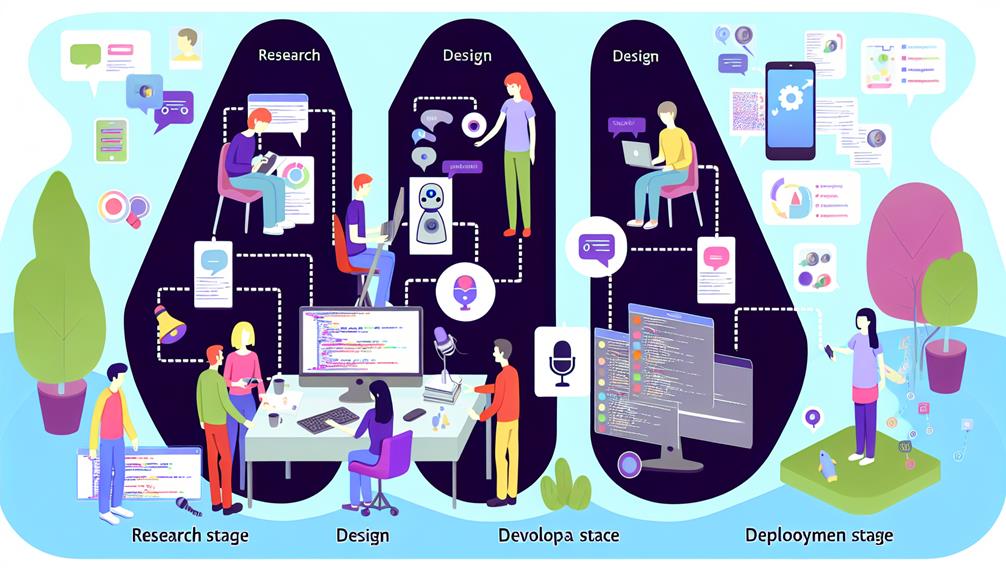
So, you're diving into the world of creating a voice chatbot, right? Well, let's break it down into simple steps to make sure you craft a smooth conversational experience for your users.
First things first, you need a solid plan to map out how your chatbot will interact. Think about designing conversational flows and incorporating fancy speech recognition tech. You'll want to sprinkle in some natural language processing (NLP) magic to help your chatbot understand and respond to users in a way that makes sense.
Once you've got the basics down, it's time to test and tweak your voice chatbot. This step is key to ensuring it can accurately translate speech to text and vice versa, making the whole experience top-notch for your users.
Now, here's a neat trick – consider hooking up your voice chatbot with platforms like Alexa or Google Assistant. This can really amp up accessibility and engagement levels. And hey, don't forget to keep an eye on your chatbot's performance regularly. Updates and tweaks are crucial to keep your users happy and satisfied.
Challenges in Voice Chatbot Implementation
Dealing with challenges when implementing a voice chatbot can be complex. Issues such as technical compatibility, user adoption, and limitations in natural language processing can really throw a wrench in the works. Overcoming these hurdles is key to smoothly integrating voice-activated chatbots into your business strategy.
Let's dive into some real-world experiences and tips to navigate these obstacles effectively.
Technical Compatibility Issues
When setting up voice chatbots for businesses, dealing with technical compatibility challenges is key to ensuring smooth interactions across various platforms and devices. Here are three important points to consider:
- Hardware and Software Differences: Technical hiccups can arise due to the diverse hardware and software setups on different devices.
- Compatibility with Operating Systems and Browsers: Ensuring that the chatbot works well with a range of operating systems, browsers, and devices can be tricky.
- Optimizing for Different Platforms: Voice chatbots must be fine-tuned for different platforms like smartphones, smart speakers, and web browsers to provide a consistently user-friendly experience.
Tackling these technical compatibility challenges is crucial for delivering a seamless and enjoyable experience when customers engage with voice-activated chatbots.
User Adoption Concerns
When it comes to implementing voice chatbots and addressing user concerns, striking a balance between privacy and data security is key. Issues like privacy worries, user mistrust, and adoption barriers can really put a damper on the success of voice-activated chatbots. People get anxious about data breaches and not having control over their info, which makes them hesitant to share sensitive details.
The discomfort with voice tech also stems from worries about privacy and the potential misuse of personal data.
To tackle these challenges, businesses need to prioritize strong data protection measures and be transparent about how they handle user information. Building trust and encouraging the widespread use of voice chatbots across different industries hinges on addressing these privacy fears head-on.
Natural Language Processing Limitations
Navigating the ins and outs of natural language processing (NLP) challenges is crucial for enhancing the performance and user experience of voice-activated chatbots. When diving into the realm of voice chatbots, you might come across hurdles related to NLP that could impact how they function. Here are three key takeaways to keep in mind:
- Getting it Right: Voice chatbots can stumble when it comes to grasping slang, accents, and variations in language, which can affect how they respond.
- Understanding User Intent: NLP limitations may cause voice chatbots to provide inaccurate or irrelevant responses, missing the mark on what users are actually looking for.
- Impact on User Experience: Flaws in NLP accuracy can lead to user frustration and diminish the chatbot's ability to effectively address queries.
Solutions for Voice Chatbot Challenges
When it comes to improving voice chatbots and making them more effective in real-world scenarios, advanced speech recognition technology is a game-changer. By tapping into cutting-edge AI algorithms, voice chatbots can better grasp different accents and speech patterns, leading to smoother interactions.
Ongoing training and fine-tuning are key to overcoming technical hurdles and boosting chatbot performance. Check out some practical solutions for enhancing voice chatbots:
- Advanced Speech Recognition: Using top-notch technology to boost accuracy in understanding user input, ultimately enhancing the overall user experience.
- AI Algorithm Optimization: Continuously refining algorithms to better understand and respond to a variety of speech patterns, making chatbots more effective.
- Training Data Diversity: Including a wide range of accents and languages in training data to improve the chatbot's ability to understand diverse users better.
Enhancing Customer Experience With Voice Technology

Looking to ramp up customer engagement? Voice technology is a game-changer, offering tailored interactions that meet your customers' needs head-on.
By tapping into voice-activated chatbots, you can step up your service game, making it smoother and more customer-focused.
Elevate your customer journey with the magic of voice technology.
Voice for Better Engagement
Want to take your customer service to the next level? Imagine being able to assist your customers instantly, just by listening to their voice. With voice technology, you can do just that, providing personalized interactions and quick responses that make your business stand out. By using voice commands and natural language processing (NLP), you can transform customer interactions, offering seamless and efficient support.
Here's how integrating voice technology can enhance engagement:
- Immediate Assistance: Customers can now receive instant help with just a simple voice command, eliminating long wait times and frustration.
- Personalized Conversations: Build stronger connections with your customers through customized conversations and tailored recommendations.
- Efficiency with NLP: By leveraging NLP, you can better understand customer queries, ensuring precise responses and smoother interactions.
Personalized Interactions via Voice
Upgrade your customer interactions with the magic of personalized experiences through voice technology. Voice assistants armed with natural language processing (NLP) are changing the game in customer service by offering customized solutions and recommendations.
By instantly grasping customer questions, these voice-activated systems provide tailored interactions that elevate the overall customer journey. Businesses leveraging voice technology can streamline their customer service process, doing away with confusing phone menus and long wait times.
Through personalized conversations via voice, companies can forge stronger bonds with their customers, predict their needs, and deliver top-notch service. Embracing this tech not only boosts customer satisfaction but also enhances operational efficiency and fuels business growth.
Improving Service Through Voice
Boost your customer service skills with the magic of voice technology, transforming how businesses connect with and serve their customers.
- Voice assistants, like chatbots, use natural language processing (NLP) to instantly grasp customer queries, delivering tailored responses and suggestions.
- Thanks to artificial intelligence, these chatbots can efficiently manage high volumes of inquiries, slashing wait times and the hassle of complex phone menus.
- By automating everyday tasks, businesses free up time and resources, allowing them to focus on strategic priorities that fuel productivity and expansion.
Increasing Operational Efficiency With Voice Chatbots

Voice-activated chatbots are a game-changer for businesses, making operations smoother by taking care of repetitive tasks and freeing up time for more important work. These chatbots work like virtual assistants, handling routine jobs effortlessly while you focus on the bigger picture.
With voice-activated chatbots, companies can streamline their workflows and stay organized more efficiently. By simply speaking commands, accessing information becomes a breeze, simplifying tasks and boosting overall productivity. Businesses discover that these chatbots make their daily operations run more seamlessly, cutting down on manual labor and speeding up task completion. Embracing this technology is a strategic move that not only enhances efficiency but also paves the way for greater success.
Incorporating voice-activated chatbots is like having a personal assistant that never gets tired. They help structure your day, manage information effectively, and keep everything running smoothly. By leveraging this technology, businesses can transform the way they operate and set themselves up for a more productive future.
Leveraging Voice Commands for Sales and Marketing
Want to shake up your sales approach? Picture this: speaking directly to your customers to reel in leads and provide tailored suggestions that really speak to them.
By diving into voice technology for your marketing efforts, you can extend your reach and visibility by tapping into the popular trend of voice search optimization.
Using voice commands to engage with your audience creates a seamless and personalized experience that amps up customer interactions and satisfaction levels.
Voice for Lead Generation
When you dive into using voice commands in your sales and marketing game plan, you pave the way for better lead generation and connecting with customers. Voice-activated chatbots bring a fresh approach to finding leads through personalized chats and smooth communication.
Here's how you can tap into voice for lead generation:
- Improved User Experience: Make the most of voice search and chatbots to offer a tailored and seamless experience for potential leads.
- Boosted Engagement: Get customers involved in real-time chats using voice tech, leading to more interactions and better lead collection.
- Streamlined Lead Qualification: Simplify the lead generation process by using voice-activated chatbots to assess leads efficiently, saving time and resources to focus on potential sales opportunities.
Voice in Advertising
Have you ever thought about incorporating voice commands into your advertising strategy? It can totally transform your sales and marketing game, boosting engagement and driving conversions like never before. With voice recognition technology and voice-enabled chatbots, you can create super interactive and personalized experiences for your customers. This kind of human-computer interaction not only makes the shopping journey more enjoyable but also amps up customer satisfaction levels.
Did you know that voice-activated ads have a 33% higher recall rate than traditional display ads? That's the power of tapping into voice in advertising! Businesses that have embraced voice technology have seen some impressive results, with a 25% increase in customer engagement and sales conversion rates shooting up by as much as 30%. By jumping on the voice advertising bandwagon, you can offer your customers a more tailored shopping experience, ultimately leading to better outcomes for your business.
Voice for Engagement
Voice-activated chatbots are changing the game in customer engagement, giving sales and marketing teams a powerful tool with just a spoken command. This tech boost can work wonders for businesses, making sales processes smoother, tailoring recommendations, and creating captivating marketing experiences.
Let's dive into how you can make the most of voice commands for your sales and marketing strategies:
- Elevate Customer Experience: Picture using voice searches and natural conversations to swiftly grasp and meet customer needs.
- Embrace Voice Assistants: Imagine having voice assistants at the ready to dish out instant answers and craft personalized engagement plans.
- Drive Sales Up: Harness the potential of voice technology to deliver top-notch customer service, which translates into happier customers and more effective marketing. By keeping ahead of the pack with seamless and interactive customer interactions, businesses can ramp up their sales conversions.
Overcoming Security Concerns in Voice Technology
In building trust and confidence in voice technology, it's crucial for businesses to prioritize addressing security concerns related to potential unauthorized access to personal data. As voice technology evolves, robust encryption protocols and data protection measures play a pivotal role in safeguarding sensitive information.
For example, voice-activated chatbots rely on encryption protocols to shield user data from unauthorized breaches, showcasing a strong commitment to security in voice technology development. Developers are continuously improving security measures to uphold user privacy and counter potential threats in the digital realm. Moreover, adhering to stringent data protection regulations like GDPR and HIPAA further underscores the significance of upholding high standards of privacy and security in voice technology applications.
When it comes to encryption protocols, they're utilized in voice-activated chatbots to ensure that sensitive information is protected from unauthorized access, thereby guaranteeing data security and confidentiality. Similarly, data protection measures are implemented to uphold user privacy and prevent breaches, which in turn fosters trust and confidence in voice technology. Compliance with regulations such as GDPR and HIPAA standards for data protection and privacy not only demonstrates a commitment to legal and ethical responsibilities but also reinforces the importance of maintaining privacy and security standards in voice technology applications.
Future Trends in Voice Technology Adoption

Voice technology is rapidly advancing, and we're witnessing a notable shift towards more natural and efficient communication methods in the realm of Future Trends in Voice Technology Adoption.
Businesses are embracing this evolution for a variety of reasons:
- Improved Customer Support: Cutting-edge voice bots, powered by smart algorithms, now deliver instant and personalized assistance to customers, boosting satisfaction rates and swiftly resolving issues.
- Enhanced Natural Language Processing: Breakthroughs in understanding human language allow voice bots to grasp and respond to intricate queries in a more human-like way, making interactions smoother and more intuitive for users.
- Rising Popularity of Voice Technology: With the expected surge in the voice recognition market and the increasing number of millennials engaging with voice assistants, companies are realizing the significance of integrating voice tech into their customer service strategies to remain competitive and cater to evolving consumer preferences.
Successful Case Studies of Voice Technology Implementation
Voice technology has made a huge impact across different industries, revolutionizing how businesses interact with customers and manage their operations. By leveraging speech recognition, companies have rolled out voice-activated chatbots that analyze past interactions to deliver tailored experiences.
Take the smart home gadgets scene, for example. The introduction of voice tech has spiked customer satisfaction by 25% and slashed customer service expenses by 30%. These chatbots not only streamline tasks but also ramp up customer engagement and loyalty by 20%.
What's more, businesses have witnessed a 15% efficiency boost by integrating voice tech, paving the way for more agile and responsive customer service. With voice-activated chatbots on board, response times to customer queries have plummeted by 40%, showcasing the profound impact of this technology on modern business operations.
Tips for Implementing Voice Technology in Business

Looking to boost your business operations? Consider diving into voice technology to enhance efficiency and customer engagement. Here are some tips to guide you through the process:
- Connect with Your Customers: Did you know that more than 70% of customers are open to using voice-activated chatbots? Make sure to tailor your voice technology approach to cater to their preferences. Focus on delivering personalized interactions and practical solutions to elevate their experience.
- Get Ready for Voice Search: Voice searches are on the rise and are expected to make up 50% of all searches by 2020. Ensure your online presence is ready for this shift by optimizing for voice search queries. Use natural language keywords and phrases that align with how your customers talk when searching for information.
- Boost Efficiency with Automation: Voice-activated chatbots can work wonders by handling multiple inquiries at once and automating routine tasks. This automation frees up time for you and your team to concentrate on more strategic aspects of your business, leading to improved productivity and growth.
Frequently Asked Questions
What Is an Example of a Voice Enabled Chatbot?
Picture having your very own virtual assistant ready to help you out, just like having a personal genie at your service. Take Amazon's Alexa, for instance, equipped with cutting-edge voice recognition tech, as a prime example of a voice-activated chatbot that can lend a hand with a variety of tasks.
How Do I Delete Chatbots From My Phone?
If you're looking to get rid of chatbots on your phone, just go to settings, scroll through your list of apps, pick the chatbot you want to remove, tap on uninstall, and voila, you've freed up some storage space. It's a good idea to do this regularly to keep your device clutter-free and running smoothly.
What Is the Difference Between Chatbot and Voicebot?
Think about texting with someone versus having a conversation out loud; that's the main difference between chatbots and voicebots. Chatbots will type responses to you, while voicebots like Alexa will listen to your voice commands, making tasks hands-free and convenient!
What Are the Four Types of Chatbots?
Let's talk about different types of chatbots – rule-based, AI-powered, NLP-driven, and voice-activated ones. Each type brings something unique to the table. Rule-based chatbots follow predefined paths, AI chatbots learn and adapt, NLP chatbots aim for human-like understanding, and voice chatbots interact through voice commands. Each has its own strengths and purposes in the world of chatbot technology.