When it comes to AI, tapping into the power of conversational AI with NLP is a total game-changer. Picture having chatbot assistants that can understand and respond to your questions just like a real person would. Bringing NLP into the mix with chatbots opens up a whole new world of possibilities, completely transforming how we engage with technology.
From tailored recommendations to compassionate replies, the influence of NLP on chatbot assistants is truly profound. So, how exactly does NLP take these chatbots to the next level? Let's dive into how this groundbreaking technology is shaping the future of AI-powered interactions.
Key Takeaways
When it comes to chatbot assistants, NLP technology works its magic by tailoring responses just for you. Imagine having a chat with a bot that really gets you! Thanks to advanced NLP models like BERT and GPT-3, these bots are becoming super smart and accurate in their replies. It's like having a virtual buddy who understands you perfectly.
NLP is like the language glue that connects us with machines, making conversations more intelligent and natural. By integrating NLP into chatbots, we're boosting their performance, making them more precise, and keeping users engaged. The cool part? NLP innovations are paving the way for personalized responses, detecting emotions, and creating seamless interactions that feel like chatting with a real person. It's like having a language-savvy sidekick in the digital world!
Defining NLP in AI
Let's dive into the world of NLP, which stands for Natural Language Processing, a fascinating branch of artificial intelligence that focuses on helping computers understand and generate human language effortlessly. In simple terms, NLP teaches machines to interpret the complexities of human communication using a mix of machine learning algorithms, linguistic rules, and statistical modeling.
When it comes to Conversational AI chatbots, NLP takes center stage. It gives these chatbot assistants the ability to not just grasp what users are trying to convey but also to put those interactions into context for more meaningful conversations. With the power of NLP, chatbots can smartly respond to user queries with accurate and relevant information in no time.
Moreover, NLP allows chatbots to handle the subtleties of language, such as different languages, dialects, slang, and specialized terminology. This flexibility enables chatbots to serve a wide range of customers, delivering personalized interactions tailored to individual preferences. Ultimately, NLP enhances the performance of chatbot assistants, improving user experiences and fostering smooth communication between people and machines.
Importance of NLP in AI
NLP plays a crucial role in advancing AI by helping chatbots interact more intelligently and effectively with users through natural language understanding. When we integrate NLP into Conversational AI, chatbots can understand and generate responses that feel more human-like, making the user experience better. This technology uses machine learning, statistical modeling, and linguistics to process and interpret human language, enabling chatbots to grasp user intent, sentiment, context, and meaning.
The importance of NLP in AI lies in its ability to bridge the gap between human language and machine comprehension. Chatbots with NLP capabilities can have more meaningful conversations with users, offering personalized responses based on the interaction's context. This not only boosts user satisfaction but also makes chatbot interactions more efficient.
Although implementing NLP in chatbots poses challenges like handling multiple languages, dialects, slang, and ensuring accurate interpretation of user intent, overcoming these hurdles is crucial for delivering a seamless and natural conversational experience. As NLP progresses, chatbots will improve in understanding and responding to users, taking Conversational AI to new heights.
Advancements in NLP for Chatbots
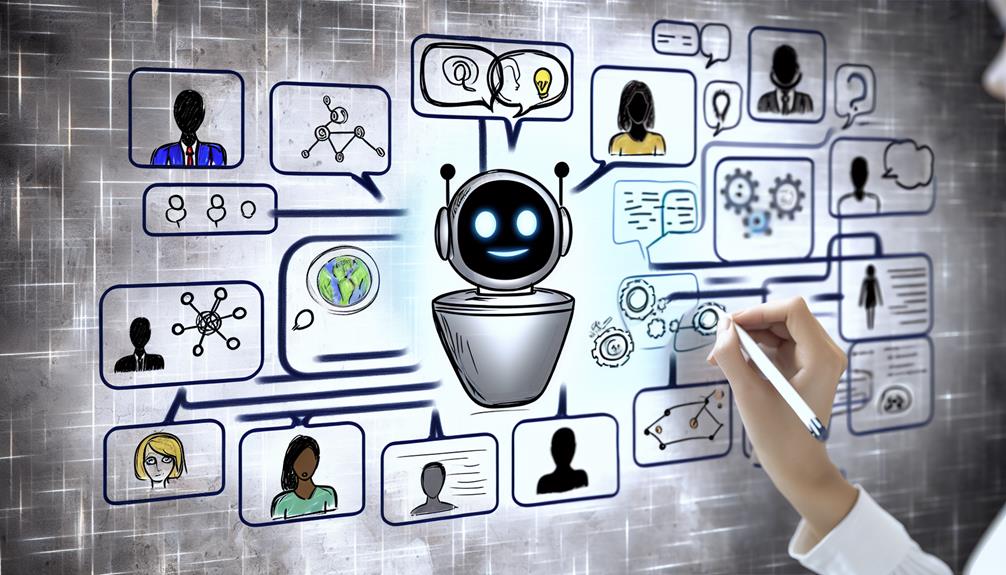
NLP advancements really ramp up chatbots, making them super smart at chatting with you. These upgrades mean they can dish out more accurate answers and really crank up the user interaction.
NLP Benefits Chatbots
Improving chatbot capabilities with the latest advancements in natural language processing really levels up these virtual assistants. It helps them grasp and reply to user inputs more accurately and with a better understanding of context.
Natural language processing works wonders for chatbots by allowing them to tackle tricky questions, different dialects, and even slang, making communication more effective. And let's not forget how NLP enhancements enable chatbots to give tailored responses through sentiment analysis, enhancing the overall user experience.
Enhanced User Interaction
By incorporating the latest advancements in natural language processing, chatbots now have the ability to take user interactions to new heights of customization and efficiency. These enhanced techniques allow chatbots to offer personalized responses by accurately understanding what users want and tailoring messages to their specific needs. Keeping the conversation flowing smoothly and coherently is easier now, as chatbots can maintain context throughout.
What's more, these bots can also pick up on user emotions to respond with empathy and appropriateness. With advanced techniques like recognizing named entities and resolving coreferences, chatbots can better interpret user inputs, making interactions even more effective and satisfying for users. These improvements in natural language processing not only enhance user satisfaction but also elevate the overall quality of chatbot conversations.
Improved Response Accuracy
Using cutting-edge NLP models like BERT and GPT-3 really boosts how accurate chatbots are in their responses. These language models, when integrated into conversational AI platforms, take chatbot performance to the next level with their Generative AI capabilities.
By grasping the context behind user queries, these models churn out more precise and contextually fitting responses, making the overall user experience much better. Contextual embeddings and attention mechanisms are key in helping chatbots keep the conversation flowing smoothly and provide spot-on answers.
Fine-tuning pretrained language models further hones the chatbot's knack for understanding user intent, resulting in tailored responses that really hit the mark with what users are looking for. This advanced NLP technology is shaking up chatbot interactions by ensuring top-notch response accuracy and user satisfaction.
Nlp's Impact on Chatbot Interaction
The way chatbots interact with us has changed drastically thanks to NLP technology. Now, these virtual assistants can understand our questions on a deeper level and respond in a way that feels personalized to our emotions and intentions. It's like having a conversation with a real person, as they can pick up on the nuances of language to accurately grasp what we're trying to convey. This personalized approach makes interactions more meaningful and engaging, ultimately leaving us more satisfied.
With NLP, chatbots don't just focus on the words we use but also on the emotions behind them. This allows them to respond with empathy and tailor their answers to suit our specific needs. By analyzing the context of our conversations, NLP helps chatbots keep the dialogue flowing smoothly, remember our preferences, and adjust their responses as the conversation evolves. This leads to more natural and effective interactions where the chatbot feels like a real conversational partner.
Moreover, NLP empowers chatbots to handle complex queries, understand different dialects, and even provide support in multiple languages, making them more versatile and accessible. By harnessing the power of NLP, chatbots can deliver accurate responses, enhance user engagement, and create a more interactive and enjoyable experience. In essence, NLP transforms chatbot interactions into intelligent and intuitive exchanges that closely resemble human conversation, elevating the overall user experience.
Successful NLP Implementations in Chatbots
When it comes to making chatbots more engaging and effective, it's all about creating a seamless user experience. Understanding what users want, how they feel, and the context of their interactions is key to having meaningful conversations.
By analyzing sentiments, maintaining context, and grasping the nuances of language, chatbots can truly shine. Techniques like spotting named entities and keeping track of the conversation flow can significantly boost the effectiveness of these interactions.
It's like having a real, intuitive conversation that leaves users feeling heard and understood.
NLP for Chatbots
Enhancing chatbot functionality with advanced natural language processing techniques is like giving them a superpower boost. NLP, fueled by AI, is the secret sauce that helps chatbots understand human language effortlessly. When chatbots can grasp and respond to what users say accurately, it's like magic – interactions become smoother, and customers leave satisfied.
Implementing top-notch NLP allows chatbots to not just understand user requests but also tailor responses to each individual, making conversations feel more personal and engaging. With NLP, chatbots can handle different languages, dialects, slang, and even industry-specific terms with ease, ensuring clear communication every time. By analyzing sentiments, keeping track of context, understanding the meaning behind words, and following the flow of conversation, NLP empowers chatbots to keep the chat rolling smoothly, making the whole experience a delight for users.
Enhancing User Experience
Improving user interactions with chatbots hinges on effectively using advanced natural language processing techniques. These tools are crucial for tailoring responses to match what users are looking for, making the experience more personal and engaging.
By grasping user intents, emotions, and context, chatbots powered by NLP can offer more precise and relevant information, ultimately leading to higher satisfaction rates. Enhanced communication through sophisticated NLP algorithms not only boosts customer service but also enriches the overall user experience.
Chatbots that can understand human language effectively pave the way for more interesting conversations, enriching the quality of interactions. The impact of NLP on chatbot interactions is clear in the positive outcomes it brings to user satisfaction and their overall experience.
Case Studies of NLP in Chatbots
Absolutely! When it comes to chatbots, integrating NLP can make a world of difference in accuracy and user satisfaction. Case studies have highlighted some impressive outcomes. NLP boosts chatbot performance by up to 90% in correctly understanding what users want. By using NLP algorithms, chatbots become better at grasping the context, tone, and subtleties in conversations, leading to more precise and personalized interactions.
Moreover, NLP in chatbots doesn't just stop at accuracy—it ramps up user engagement and satisfaction levels too. Real-world examples demonstrate how NLP helps chatbots deliver tailored responses that match user preferences seamlessly. This personalized touch not only enhances the overall user experience but also strengthens the bond between users and chatbot helpers.
Future Implications of NLP in Chatbot Intelligence
With the advancements in NLP for chatbots, you can look forward to more natural and intuitive conversations that enhance user interactions.
These chatbots will become more personalized, offering tailored responses based on individual preferences and behaviors.
The accuracy of responses will improve significantly, ensuring that users receive relevant and precise information.
It's exciting to see how NLP is evolving to create more engaging and effective chatbot experiences.
Enhanced User Interaction
Chatbots these days are really stepping up their game with some fancy NLP tricks. Imagine having a chat with a bot that understands not just what you're saying but also how you're feeling! It's like talking to a friend who really gets you. And the best part? These bots can keep up with the conversation flow, making it all feel super natural.
Ever heard of named entity recognition? It's like the bot has superpowers to pick out specific things you mention, making the responses right on the money. And let's not forget about coreference resolution – this feature helps the bot remember what you talked about earlier, so you don't have to keep repeating yourself.
All these cool NLP upgrades aren't just for show. They make chatting with bots a whole lot better, giving you a more personalized and intuitive experience. Who knows what other mind-blowing features they'll come up with next!
Personalized Assistance Capabilities
With the rise of advanced NLP technologies, chatbot assistants are changing the game when it comes to personalized help, making user experiences smoother with tailored advice and flexible interactions. By studying how users communicate, their preferences, and habits, NLP gives chatbots the power to offer personalized answers and fixes that suit each person's unique needs.
These chatbots shine at adapting to how users talk, their emotions, and the situation, resulting in more interesting conversations. Looking ahead, the impact of NLP on chatbot smarts means even more customization, boosting user satisfaction and efficiency. Thanks to this tech, chatbot assistants can step in with proactive help, ensuring seamless interactions with users.
This development signals a move toward friendlier, more efficient, and user-focused exchanges, reshaping the world of digital support.
Improved Response Accuracy
Imagine a world where chatbots truly understand you, where they don't just respond but respond accurately and personally. Thanks to advancements in NLP, chatbots are getting smarter at grasping what you mean, which means they can now tailor responses to you specifically.
This not only makes interactions smoother but also ensures you get exactly what you need, making the experience more engaging. The future looks bright for chatbots, with NLP paving the way for more precise and personalized interactions that truly elevate user satisfaction.
Nlp's Role in Chatbot Evolution
NLP plays a crucial role in shaping the evolution of chatbots, making user interactions more seamless and engaging by improving how chatbots understand and respond to human language. Let's dive into how NLP is transforming the world of chatbots:
- Enhanced User Conversations: NLP equips chatbots to process natural language inputs, allowing them to have more meaningful exchanges with users.
- Tailored Responses: Through NLP technologies like sentiment analysis and named entity recognition, chatbots can offer personalized responses, enriching the user experience and satisfaction.
- Contextual Understanding: Chatbots integrated with NLP can grasp conversation context, interpret semantic meanings, and maintain dialogue flow for coherent and relevant interactions.
With NLP driving these advancements, chatbots aren't just communicating differently but also accurately deciphering user intents, even amidst challenges like handling multiple languages, dialects, slang, and jargon.
As chatbots evolve with NLP as their foundation, the future of conversational AI looks promising, promising more natural and fluid interactions for users in various fields.
Enhancing Chatbot Communication With NLP
Using natural language processing (NLP) really boosts chatbot communication. It helps these bots understand what users want and have more meaningful conversations. With NLP, chatbots can grasp the context, meaning, and subtleties of human language, making them better at responding. By incorporating NLP, chatbots can maintain coherent and personalized interactions, making the overall customer experience smoother.
NLP techniques like sentiment analysis and named entity recognition are key in improving chatbot interactions. Sentiment analysis allows chatbots to sense user emotions and reply appropriately, while named entity recognition helps in spotting and pulling out important details from user inputs. These abilities lead to smarter and more targeted responses, ultimately enhancing the quality of chats between chatbots and users.
Furthermore, using NLP in chatbots tackles various communication challenges, such as supporting multiple languages, understanding different dialects, and catching slang. This ensures that chatbots can effectively engage with users from various linguistic and cultural backgrounds. Overall, NLP significantly amps up chatbot communication abilities, making conversations more natural, efficient, and tailored to individual user needs.
Nlp's Contribution to Chatbot Personalization
When it comes to making chatbots more personalized, it all comes down to how well they can understand and adapt to each user. By tapping into the power of NLP, chatbots can delve deeper into user input, picking up on context, emotions, and intentions to provide responses that feel tailor-made.
Let's dive into how NLP plays a crucial role in chatbot personalization:
- Getting to Know User Preferences: NLP sifts through user data to figure out what each person likes, helping chatbots serve up recommendations and tips that match their interests.
- Keeping the Conversation Flowing: With NLP keeping track of the chat's direction and context, chatbots can keep the chat smooth and engaging, making sure the conversation stays on track.
- Boosting User Experience: Personalization through NLP isn't just about pleasing users – it's also about making interactions more efficient. Chatbots powered by NLP can dish out responses that are on point and customized, giving users a better experience overall.
In essence, NLP takes chatbot personalization to a whole new level by diving deep into user behavior and preferences, making conversations more meaningful and effective.
Innovations in NLP for Chatbot Development
Lately, there have been some exciting developments in the world of chatbots that are really changing the game. New advancements in Natural Language Processing (NLP) are making chatbots smarter and more intuitive when it comes to understanding and responding to human language.
One cool thing that's come out of this is sentiment analysis, which lets chatbots pick up on how users are feeling and tailor their responses accordingly. This not only improves the overall user experience but also makes conversations with chatbots more personalized and engaging.
Another crucial aspect of NLP that's making waves in chatbot development is Named Entity Recognition (NER). This nifty feature allows chatbots to pinpoint and extract specific information from what users say, making communication smoother and responses more precise. And let's not forget about coreference resolution techniques, which help chatbots understand pronouns and keep conversations flowing naturally.
Nlp's Transformative Effects on Chatbot Technology
The way chatbots are evolving thanks to NLP is truly changing the game in customer interactions. Here's how this tech is shaking things up:
- Engaging Conversations: NLP lets chatbots understand what users mean, feel, and want, making chats more meaningful and relatable. By using natural language understanding, chatbots can talk in a way that feels more human and tailored to each user.
- Tailored Responses: With tricks like spotting names and sorting out references, chatbots can customize answers for each user, giving them the info they need. This personal touch amps up the user experience and boosts communication between the user and the chatbot.
- Smooth Communication: By keeping track of the conversation's flow, chatbots stay on the same page as users, leading to coherent chats and seamless experiences. This not only eases communication but also builds trust with users, making the chatbot more effective in meeting their needs.
Frequently Asked Questions
How NLP Is Used in Chatbot?
Let's talk about chatbots! These smart programs use natural language processing (NLP) to understand what we say, making our interactions super smooth. By combining machine learning, statistics, and linguistics, chatbots can figure out what we're trying to say. They then respond in a way that feels just like chatting with a real person, keeping the conversation interesting. When chatbots analyze our mood and the context of our messages, it makes our experience even better.
Does Conversational AI Use Nlp?
Absolutely, chatbots these days heavily rely on Natural Language Processing (NLP) to understand what users are saying. This fancy tech helps them figure out the meaning behind our words, how we're feeling, and then craft responses that sound just like a real person. NLP even lets them chat in different languages and make sure they give us answers that feel tailored to our needs. It's like having a super smart buddy who always gets what we're saying!
What Is the Difference Between Chatbot and Conversational Ai?
In the world of AI, chatbots are like actors following a script, while Conversational AI is the method actor who can adapt to any role. It uses advanced NLP and machine learning for fluid interactions, like a skilled performer on stage. With its dynamic capabilities, Conversational AI can switch roles seamlessly, making interactions more engaging and personalized. It's like having a versatile actor who can improvise and connect with the audience in real-time, creating a more natural and human-like conversation experience.
What Is the Difference Between NLP and LLM Chatbot?
When it comes to chatbots, NLP is all about understanding language, while LLM chatbots shine at crafting intricate text. NLP picks up on subtle language nuances, while LLM taps into vast data to provide detailed responses. NLP deciphers, LLM produces; each enhancing the other's strengths in a dynamic way.