
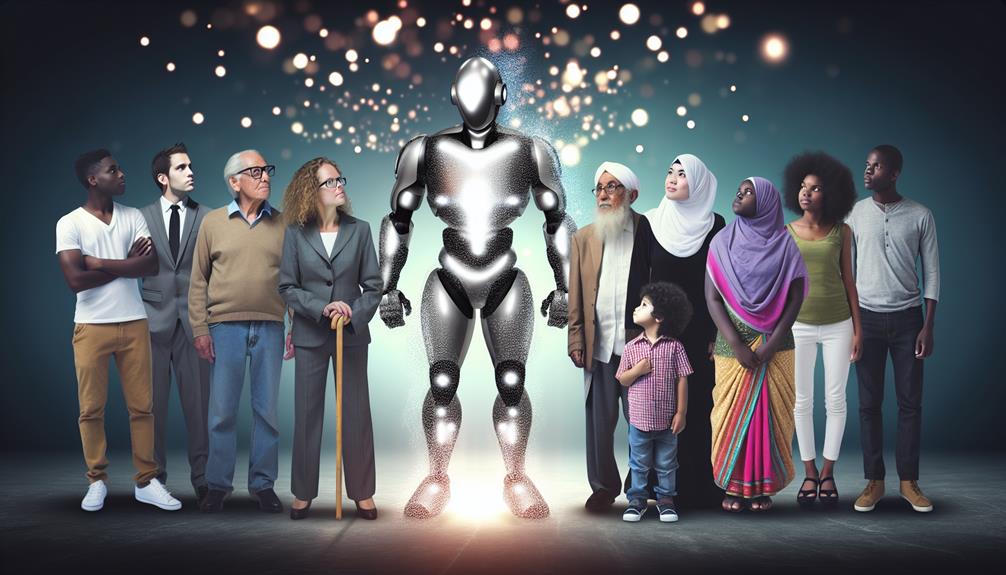
Curious about the brains behind ChatGPT? This incredible chat tool was born from the creative minds at OpenAI, with key players like Sam Altman and Elon Musk in the mix. But that's just the beginning of the story.
From its inception to the latest GPT-4 model, the journey of ChatGPT reveals a fascinating evolution in natural language processing. Stay tuned to uncover the captivating tale of innovation that brought ChatGPT to life.
Key Takeaways
Back in December 2015, a team from OpenAI, spearheaded by Sam Altman and Ilya Sutskever, set out on a mission to push the boundaries of natural language processing. Fast forward to November 30, 2022, they unveiled ChatGPT, a cutting-edge innovation harnessing the power of models like GPT-3 and GPT-4. This breakthrough represents a significant leap forward in how we interact with technology, paving the way for more advanced communication systems. The team's dedication to enhancing language models has led to remarkable advancements in the field, shaping the future of human-AI interaction.
OpenAI's Founding Members
Back in December 2015, a group of forward-thinkers came together to establish OpenAI with a grand mission in mind: to push the boundaries of artificial general intelligence (AGI). This team, comprised of Sam Altman, Greg Brockman, Elon Musk, Ilya Sutskever, Wojciech Zaremba, and John Schulman, laid the foundation for what would become a powerhouse in the AI industry.
Sam Altman, known for his savvy business skills, teamed up with Greg Brockman, a tech whiz, and the iconic entrepreneur Elon Musk to kickstart this groundbreaking venture. Adding to the mix, Ilya Sutskever, a respected AI expert, and Wojciech Zaremba, a machine learning luminary, brought invaluable technical expertise to the table. John Schulman, with his deep knowledge of reinforcement learning, rounded out the team perfectly.
Together, these visionaries charted a course for OpenAI that led to remarkable AI advancements, including the creation of transformative technologies like ChatGPT. Their collective dedication and expertise continue to drive OpenAI towards even greater innovations in the field of artificial intelligence.
Development of GPT Models
GPT models have come a long way since the debut of GPT-1 back in June 2018, which had 117 million parameters. Following that, GPT-2 arrived in February 2019, packing a hefty 1.5 billion parameters, showing a clear move toward bigger and more sophisticated models.
The latest breakthrough was the introduction of GPT-3 in June 2020, with a jaw-dropping 175 billion parameters, highlighting the incredible strides in AI language processing capabilities. This progression underscores the rapid advancements in AI technology, pushing the boundaries of what machines can achieve in understanding and generating human language.
GPT Model Evolution
The journey of GPT models has been quite a remarkable one, starting back in June 2018 when OpenAI introduced GPT-1 with 117 million parameters. This laid down the foundation for what was to come.
In February 2019, we saw the emergence of GPT-2, boasting 1.5 billion parameters and showcasing a significant leap in capabilities.
Fast forward to June 2020, and the unveiling of GPT-3 was a game-changer with a whopping 175 billion parameters, revolutionizing language understanding and generation. This upgrade allowed for direct interaction with ChatGPT and a wide array of language tasks.
Now, with the latest model, GPT-4, the trend of exponential growth in AI language models continues, promising even more advancements in the field.
AI Language Advancements
In the realm of AI language advancements, we've witnessed a remarkable journey unfolding through the evolution of successive GPT models. OpenAI's ChatGPT, under the guidance of Chief Scientist Ilya Sutskever, stands out as a significant leap forward in AI conversation and content creation. It all began with GPT-3, celebrated for its prowess in generating language, setting the stage for the more refined ChatGPT. This model elevates conversational AI, allowing for more nuanced and engaging interactions. Looking ahead, the horizon holds the promise of GPT-4, hinting at even greater language model sophistication. The ongoing progress in these models underscores the ever-expanding boundaries of AI language technologies.
| GPT Models | Advancements | Notable Features |
|---|---|---|
| GPT-3 | Language generation | Large-scale pretraining |
| ChatGPT | Enhanced conversation | Improved dialogue flow |
| GPT-4 | Future possibilities | Potential for enhanced context understanding |
Unveiling ChatGPT
When ChatGPT burst onto the scene, it changed the game in AI-driven conversational technology with its advanced features and human-like interactions. Created by OpenAI, a company established in 2015 by tech visionaries Elon Musk and Sam Altman, ChatGPT marked a significant advancement in artificial intelligence language models.
Its public debut on November 30, 2022, highlighted the outcome of extensive research and development. The brilliant minds at OpenAI trained ChatGPT on massive amounts of data to empower it to engage in dialogues that closely mirror human conversations. Through continuous innovation and enhancements by OpenAI's team, ChatGPT has evolved to refine its capabilities over time.
This launch represented a monumental milestone in the AI realm, showcasing ChatGPT as a testament to the remarkable strides made in developing more sophisticated and human-like language models.
Evolution From GPT-3
When OpenAI transitioned from GPT-3 to ChatGPT, it really showed how much AI technology has advanced. The upgrade from GPT-3 to ChatGPT was a big leap forward in how well the model could generate language and hold conversations. ChatGPT, as the newer version of GPT-3, clearly improved in the quality of responses and interactions. This upgrade reflects OpenAI's dedication to refining neural networks for better language understanding. Key figures like Sam Altman and Ilya Sutskever led the team at OpenAI in developing ChatGPT from its predecessor, GPT-3.
This shift highlights the ongoing progress in artificial intelligence, especially in natural language processing. The improvements from GPT-3 to ChatGPT set the stage for ChatGPT Plus and future versions, showing OpenAI's commitment to pushing AI technology to enhance how humans and computers interact. It's exciting to see how far AI has come and where it's headed next.
Advancements in AI Conversations
Recent breakthroughs in AI conversations have completely transformed how we engage with technology. The jump from GPT-3 to GPT-4 within ChatGPT by OpenAI marks a huge stride in the realm of artificial intelligence and natural language processing. The evolution of ChatGPT highlights the impressive advancements in crafting AI models that can hold conversations like humans and generate text with precision. OpenAI's dedication to building a chatbot that aids users in a range of tasks has been a driving force behind the innovation in conversational technology.
The upgrade to GPT-4 showcases a continuous process of learning and enhancement in AI conversation technology, underscoring the commitment to improving user experience and broadening the capabilities of artificial intelligence. These progressions haven't only refined our interactions with technology but have also unlocked new potentials for leveraging AI across various industries. The progress in ChatGPT signifies a significant shift towards more sophisticated and user-friendly AI conversations, setting the stage for exciting applications down the road.
ChatGPT's Innovative Features
ChatGPT, created by OpenAI, stands out in the world of AI chatbots with its cutting-edge features that revolve around understanding and generating natural language. By harnessing the power of advanced language models like GPT-3 and GPT-4, ChatGPT drives its conversational skills. OpenAI's dedication to training ChatGPT with vast datasets enables it to produce responses that are spot-on in context. This methodology boosts the AI model's ability to process natural language, resulting in smoother and more captivating interactions. A standout feature of ChatGPT is its knack for engaging in conversations that feel remarkably human, making it a standout player in the realm of machine learning-powered text generation.
- Utilizes Large Language Models (LLMs) such as GPT-3 and GPT-4
- Generates Contextually Relevant Responses through Extensive Data Training
- Improves Natural Language Processing (NLP) Capabilities
- Engages in Human-like Conversations
- Driven by State-of-the-Art Text Generation Powered by Machine Learning
Impact on Written Content Generation
Changing the game in how we create written content, ChatGPT has tapped into cutting-edge AI language models to empower users in weaving stories, essays, and poems with a remarkably human-like touch.
As a step up from GPT-3, ChatGPT harnesses AI technology to supercharge the way we generate written content. Using natural language processing (NLP) methods, this AI model fine-tunes its responses to deliver contextually relevant and precise content.
By constantly learning and adapting from interactions, ChatGPT molds itself to match users' writing styles, resulting in more personalized outputs. The extensive text data pre-training of GPT-3 significantly amplifies ChatGPT's efficiency in swiftly producing top-notch written content.
This AI-driven method not only streamlines the content creation process but also guarantees that the text created resonates authentically with human-like interactions, providing users with a smooth and captivating experience in crafting various forms of written content.
Future of ChatGPT
The future of ChatGPT looks incredibly promising with the advancements in artificial intelligence technology.
We're seeing ChatGPT being used in a wide range of fields, highlighting its flexibility and significant impact.
It's set to change how we interact with technology and how it supports us in our daily tasks and decision-making processes.
The potential for ChatGPT to revolutionize these areas is truly exciting.
Chatgpt Advancements
ChatGPT is gearing up to revolutionize how we interact with AI through some exciting upgrades. Picture this: better grasp of language nuances, smoother chats, and cleverer responses—all in the pipeline. OpenAI is fine-tuning ChatGPT to bring us:
- Sharper language comprehension.
- Enhanced chit-chat skills.
- Wittier and more nuanced replies.
- Regular tune-ups and improvements.
- Progress in the world of natural language processing.
These advancements paint a picture of AI tech evolving and innovating, particularly in the realm of chat applications. With ChatGPT shaping up for more lifelike interactions, we're looking at a future where AI drives even more engaging and seamless conversations.
Applications of ChatGPT
ChatGPT is at the forefront of AI innovation, reshaping how we interact in various industries. With advancements in natural language processing and unsupervised learning, it's paving the way for more nuanced conversations and context-aware responses. As it evolves, ChatGPT could delve into boosting creativity, emotional intelligence, and multi-modal capabilities, making it a versatile AI companion. Imagine its integration with virtual and augmented reality, offering immersive user experiences like never before.
The potential applications of ChatGPT span across sectors like healthcare, finance, and entertainment, where its data-driven approach could revolutionize how computer programs engage with users. Picture a future where ChatGPT powers personalized interactions, generates tailored content on the fly, and seamlessly fits into our daily workflows. It's exciting to think about the endless possibilities this AI tool can bring to the table, enhancing our digital experiences in ways we've never imagined.
Chatgpt in Technology
ChatGPT is at the forefront of the AI revolution, set to transform how we interact with technology through its advanced language skills and immersive interfaces. Developed by OpenAI, a key player in AI research, the ChatGPT team is a group of experts in machine learning and natural language processing. Their goal with ChatGPT is to expand the possibilities of AI in various fields, especially in the realm of conversational AI.
The future of ChatGPT looks bright, with enhancements in language understanding, context awareness, and overall user engagement. As ChatGPT advances, it's expected to raise the bar for conversational AI, offering smoother and more intuitive interactions with machines than ever before.
Frequently Asked Questions
How Does Chatgpt Handle Offensive or Sensitive Topics?
At ChatGPT, we actively moderate our conversations to keep things respectful and safe for everyone involved. Our system filters out any offensive or sensitive topics to maintain a positive environment that aligns with community standards. This ensures that you can chat without running into any inappropriate content.
Can Chatgpt Understand and Generate Multiple Languages?
ChatGPT is your go-to for chatting in over 20 languages effortlessly. It adapts to your language choice, helping you connect with people worldwide. Its ability to speak many languages enhances cross-cultural conversations, promoting inclusivity and making it easier for a diverse audience to join in.
What Are the Potential Ethical Concerns Surrounding Chatgpt?
When using ChatGPT, it's important to be cautious because it can sometimes show biases or generate harmful content based on its training data. One key concern is the potential for spreading misinformation, so it's essential to fact-check information before sharing it. Additionally, there are privacy issues to consider, such as how conversations are stored and the possible misuse of user data. Consent and attribution are also important aspects to address when using AI tools like ChatGPT. Furthermore, ongoing discussions revolve around the responsibilities of developers and the accountability of AI models. It's crucial to stay informed and mindful of these ethical considerations while using ChatGPT or any similar technology.
Is There a Limit to the Length of Responses Chatgpt Can Generate?
Absolutely! In ChatGPT, the responses are limited to 4096 tokens, which helps keep the answers concise and to the point. If your prompts are too lengthy, it might impact the response length. To get more detailed answers within this limit, you can tweak your prompts for better results.
How Does Chatgpt Differentiate Between Fact and Opinion?
When it comes to telling fact from opinion, ChatGPT relies on the context and what it already knows. You can steer it towards giving you factual answers by asking the right kinds of questions. ChatGPT's responses mix together solid facts with personal viewpoints drawn from its training material.

